

 Plastic Pollution and Recycling
Join the global bottle deposit program
Fuelled by the world’s most progressive people.

When a plastic package reaches the end of its useful life, someone still has to collect it, sort it, transport it and find a responsible way to manage it. In the Philippines, that responsibility is increasingly becoming part of doing business. This is where a producer responsibility organization comes in. But what exactly is a PRO, and what does it actually do for companies?
A producer responsibility organization helps businesses fulfil their responsibilities under extended producer responsibility (EPR) by coordinating the people, infrastructure, data and processes needed to recover and responsibly manage post-consumer packaging. For businesses, a PRO can make a complex process more manageable. For communities, it can help strengthen collection systems and create opportunities for people who already play an important role in recovering recyclable materials.
Understanding this role is increasingly important in the Philippines, where the EPR Act of 2022 is changing how businesses approach plastic packaging and waste management.
What is a producer responsibility organization?
A producer responsibility organization (PRO) is an organization that helps producers fulfil their responsibilities under an EPR system.
The concept is closely connected to extended producer responsibility, an environmental policy approach that extends a producer’s responsibility for a product beyond the point of sale and into its post-consumer stage. Instead of leaving the full burden of managing discarded products to local governments and taxpayers, EPR places greater financial or operational responsibility on producers.
A company can sometimes manage its EPR responsibilities on its own. However, doing everything individually can be difficult, particularly when a business sells products across many locations and needs to demonstrate that its packaging has actually been recovered and properly managed.
A PRO provides another option: companies can work with an organization that coordinates the recovery and management of the relevant waste stream on their behalf.
This type of collective producer responsibility model is one in which producers work through a PRO that manages the product waste stream, reports to authorities and communicates with relevant stakeholders. Producers contribute financially to cover the costs of the system.1
In simple terms, a PRO helps turn an EPR obligation into an operating system.
Why do we need PROs in the first place?
Plastic waste does not disappear when a product is thrown away.
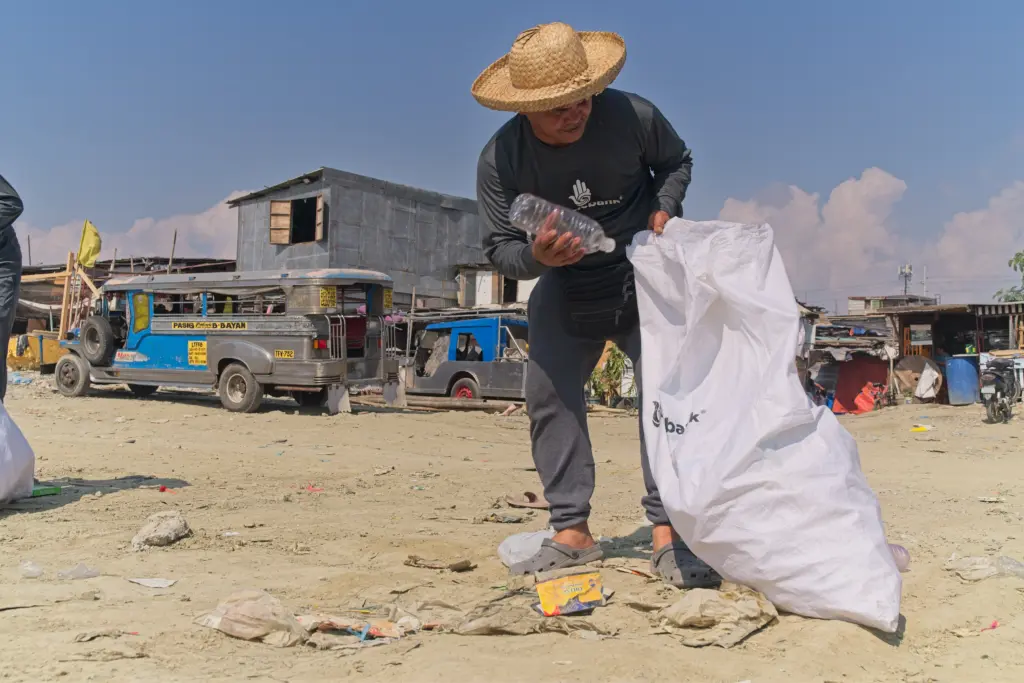
Someone has to pick it up. Someone has to sort it. Someone has to transport it. Someone has to determine whether it can be recycled and where it should go next. There also needs to be a way to document what happened to the material.
These activities can involve households, collection communities, junk shops, local governments, transporters, aggregators, processors, recyclers and businesses.
Coordinating all of them is one of the major challenges of building a functional recycling system.
The challenge is particularly significant in the Philippines. The World Bank estimates that the country generates about 2.7 million tonnes of plastic waste every year, with an estimated 20% ending up in the ocean.2 The country also faces gaps in waste management infrastructure and recycling capacity.
This means that achieving EPR targets is not simply a matter of calculating how much plastic a company puts on the market. There must also be a system capable of recovering the material.
That is where a PRO can play an important role.
What does a producer responsibility organization actually do?
The exact responsibilities of a PRO depend on the country’s EPR framework and the specific waste stream involved. But in practice, a PRO can perform several interconnected functions.
1. It helps companies understand and meet their EPR obligations
For a business, EPR can involve regulatory requirements, programme design, recovery targets, documentation, audits and reporting.
A PRO can help a company understand what it needs to accomplish and establish a programme to meet those requirements.
In the Philippines, this is particularly relevant because the required recovery rate for plastic packaging has increased progressively. The current targets are 20% for 2023, 40% for 2024, 50% for 2025, 60% for 2026, 70% for 2027, and 80% from 2028 onwards.
For an obliged enterprise, this creates an ongoing operational responsibility rather than a one-time sustainability project.
A PRO can help translate that requirement into a practical recovery programme.
2. It helps organize plastic recovery
Meeting an EPR target requires actual recovery.
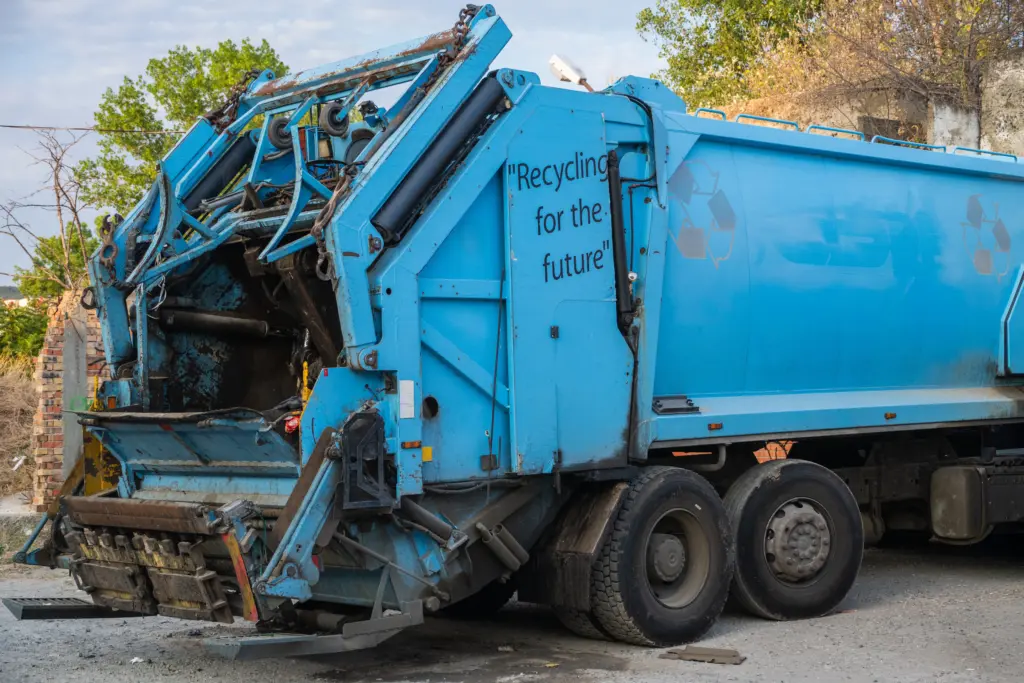
This can involve establishing or working with collection points, collection communities, aggregators, transport providers and recycling facilities. A PRO may coordinate these different parts of the chain so that recovered materials can move from where they are discarded to an appropriate next destination.
This is particularly important for plastics that have relatively low market value.
Some valuable recyclable materials already move through established recycling channels. However, other materials can be harder to recover because collection, sorting and transportation may cost more than the material is worth on the open market.
EPR can help address this gap by creating a source of funding for recovery activities.
3. It connects recovered materials to recycling and other appropriate destinations
Collection is only one part of the process.
A system is not truly circular if plastic is collected but ultimately sent somewhere inappropriate or cannot be processed into another useful material.
A PRO can therefore help establish relationships with accredited or appropriate processing and recycling facilities and coordinate the movement of recovered material through the value chain.
This is one reason traceability matters.
Companies increasingly need to know not only how much material was recovered, but also where it came from, where it went and how it was managed.
Plastic Bank, for example, describes its EPR model as providing traceability from collection branches through to processors, alongside third-party verification of declared collection impacts.
4. It provides data and documentation
One of the less visible but important functions of a PRO is data management.
A company cannot credibly report its EPR performance based on an estimate of how much plastic it believes was collected. It needs evidence.
That can mean records of collection volumes, transactions, locations, material types, processors and other relevant information.
In the Philippines, reported plastic packaging recovery and diversion accomplishments are subject to validation through an EPR compliance audit conducted and certified by an independent third-party auditor.
A capable PRO then needs systems that can produce reliable, auditable information.
This is where technology can become useful. Digital tracking systems can help connect physical collection activities with records that companies can use for compliance and sustainability reporting.
A PRO is more than a collection service
It can be tempting to think of a PRO as simply a company that collects plastic.
But that’s not all.
Collection is important, but an effective PRO needs to operate across a much wider ecosystem. It may coordinate collection partners, recyclers, transport, data systems, community programmes, regulatory requirements and reporting.
It also needs to understand how the different parts of the waste system interact.
For example, collecting more plastic does not automatically mean creating a better recycling system. If there is no appropriate processor, if material quality is poor, or if collection routes are inefficient, simply increasing collection volumes may not solve the underlying problem.
This is why the role of a PRO is fundamentally about coordination and system-building, not just collection.
What should businesses look for in a PRO?
Not all EPR partners offer the same capabilities.
For an obliged enterprise, choosing a PRO should involve more than asking how much plastic it can collect. Instead, take a look at the following factors:
- Regulatory credibility: Does the organisation understand the Philippine EPR framework and maintain appropriate registration and compliance?
- Traceability: Can the organisation show where recovered materials came from and where they went?
- Recovery capacity: Does it have an established network capable of operating at the scale your business needs?
- Documentation and audit readiness. Can the organisation provide the information needed to substantiate reported recovery?
Finally, consider what happens beyond compliance. Does the programme contribute to better recycling infrastructure, community livelihoods, circularity and measurable environmental outcomes?
These questions matter because EPR is ultimately about more than producing a document that says a target has been met.
It is about creating a system that can demonstrate what happened to the material.
Can a PRO help businesses go beyond compliance?
Yes, and this is where EPR can become more strategic.
A well-designed EPR programme can give companies information about the materials they use, the challenges involved in recovering them and the infrastructure needed to keep those materials in circulation.
That information can inform packaging redesign, material reduction, recycled content strategies and broader circularity goals.
However, EPR should not be viewed as a replacement for better product and packaging design. Recovery is necessary, but reducing unnecessary material use and designing products for reuse or recycling can address environmental impacts further upstream.
EPR can create incentives for producers to improve product design, although the strength of those incentives depends on how an EPR system is designed, including how producer contributions are calculated.3
A PRO can help manage what happens after a product is used. Businesses still have an important role in considering what happens before that product ever reaches the consumer.
A producer responsibility organization connects responsibility to action
So, what does a producer responsibility organization actually do?
It helps turn a company’s responsibility for its packaging into practical action.
A PRO can help businesses navigate EPR requirements, organize plastic recovery, connect recovered materials with appropriate recycling pathways, support collection communities, track activities, and provide documentation for compliance and reporting.
More importantly, a strong PRO can help connect the different parts of a fragmented waste system, creating a bridge between the businesses that place packaging on the market and the communities and infrastructure responsible for recovering it.
For Plastic Bank, this means seeing EPR not simply as a regulatory requirement, but as an opportunity to build stronger recycling systems while creating value for underserved communities.
Businesses have an important role to play in shaping what happens to plastic after it leaves their hands. With the right systems in place, EPR can turn that responsibility into something bigger: stronger collection networks, better recycling infrastructure, greater traceability, and more opportunities for the people who make recovery possible.
The goal is to build a system where plastic has a better chance of being recovered, recycled and kept in circulation, while creating value for the communities at the heart of that system.
That is what EPR can make possible: moving from responsibility on paper to real-world action for people, business and the planet.